
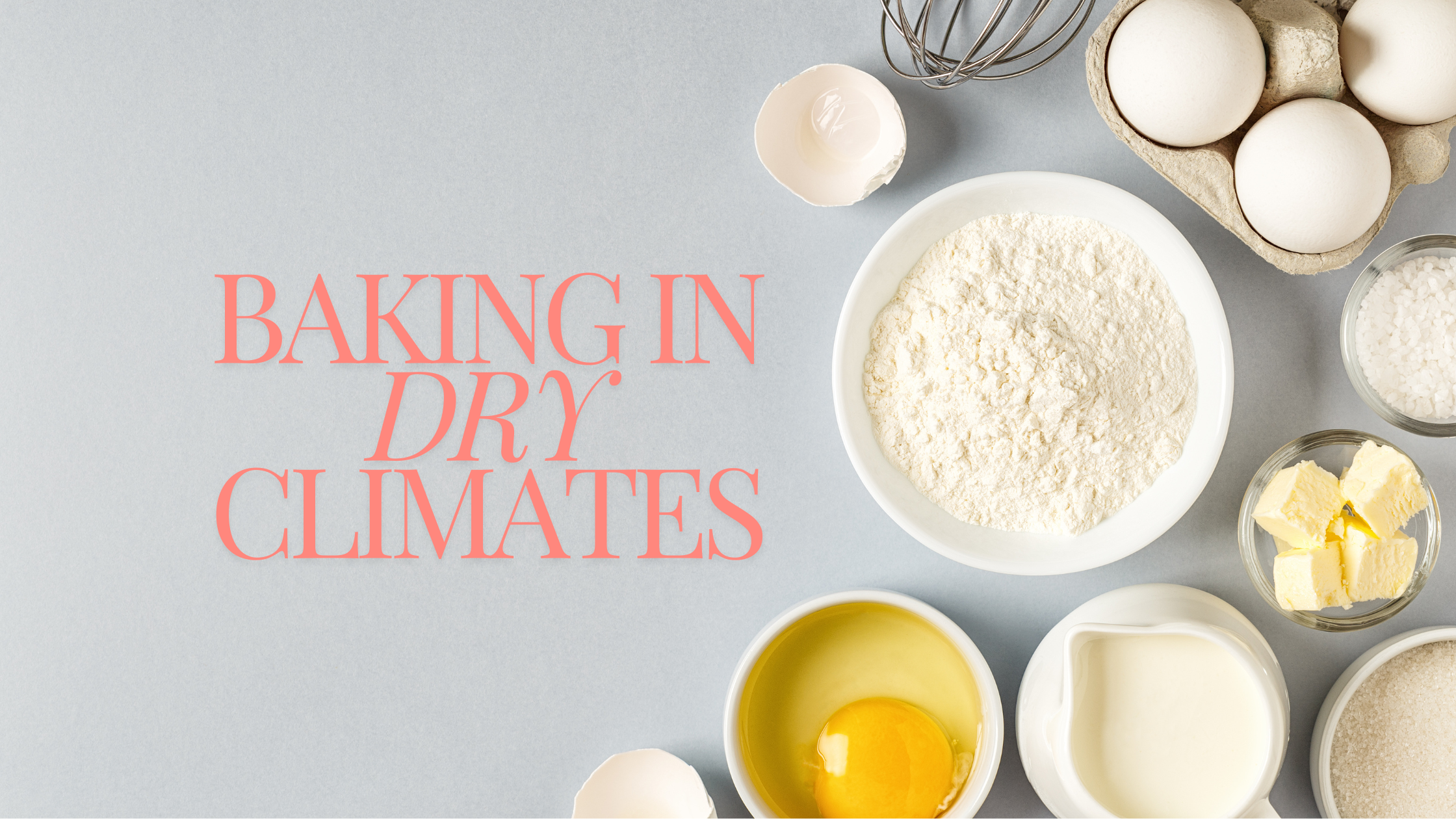
Baking in a dry or desert climate presents unique challenges due to the low humidity and high temperatures.
This post may contain affiliate links for products or services I use and love. As an Amazon Associate, I earn from qualifying purchases at no additional cost to you.
Considerations for baking in dry climate conditions:

Humidity Adjustments
In low humidity, flour can dry out more. You may need to adjust the amount of liquid in your recipes. Start by adding a little less flour or slightly increasing the liquid ingredients until you achieve the desired dough or batter consistency.
Because doughs and batters can dry out quickly, keep them covered with plastic wrap or a damp cloth to prevent them from losing moisture while working with them.
Baking Time and Temperature
High temperatures could cause fluctuations in your oven. Use an oven thermometer to ensure your oven is accurate. Baked goods might bake faster in a hot, dry environment. Start checking for doneness a few minutes earlier than the recipe suggests to avoid over-baking.
Storing Ingredients
Store perishable ingredients like butter, eggs, and dairy products in the refrigerator until you’re ready to use them. In extreme heat, even pantry staples like flour and sugar can benefit from cooler storage to maintain quality.
Be mindful of the moisture content in all ingredients. For example, brown sugar can harden in low humidity, so store it in an airtight container with a slice of bread or a hydrated terra cotta stone to keep it soft. I use this container with a built-in stone.
Yeasted Doughs
Yeast doughs may rise faster in warm temperatures, which can impact the final flavor and texture of your breads, rolls, and donuts. Keep an eye on your dough and be prepared to punch it down or shape it sooner than typical recipes suggest.
Would you like to save this recipe?
For recipes that require longer rise times or multiple rises, consider refrigerating the dough to slow down fermentation and develop better flavor.
How To Retain Moisture: Tips & Tricks
Fats: Oil provides more moisture than butter. Consider baking with olive oil or vegetable oil to retain more moisture naturally.
Cakes and Breads: Add a little extra moisture to your recipes, such as an extra tablespoon of liquid (water, milk, cream) or a bit of sour cream or yogurt. This can help counteract the drying effect of dry air.
Cookies & Brownies: Underbaking prevents cookies and brownies from drying out. The same holds true for other baked goods, but cakes need to be properly set in the middle, whereas brownies and cookies are better (in my opinion) left fudgy and gooey in the centers.
Covering Baked Goods: Once baked, cover your goods with a clean, dry cloth or store them in airtight containers as soon as they cool to prevent them from drying out.
Special Considerations
For crusty breads and certain pastries, adding steam to the oven can help achieve the desired texture. Place a pan of water in the oven or mist the dough with water before baking. This is true regardless of climate, but especially important in a dry climate.
Butter and shortening can quickly become too soft to work with if you live in a hot climate. Chill them slightly before using, and work quickly to prevent them from melting.
High Altitude Considerations
If you are also at a high altitude, additional adjustments may be necessary, such as reducing leavening agents, increasing liquid, and altering baking times and temperatures. Refer to my high-altitude baking guide for best results.
Baking in a desert climate requires careful attention to moisture levels, ingredient handling, and baking times. By making small adjustments to your recipes and techniques, you can achieve great results even in dry, high, or hot conditions.


Leave a Reply